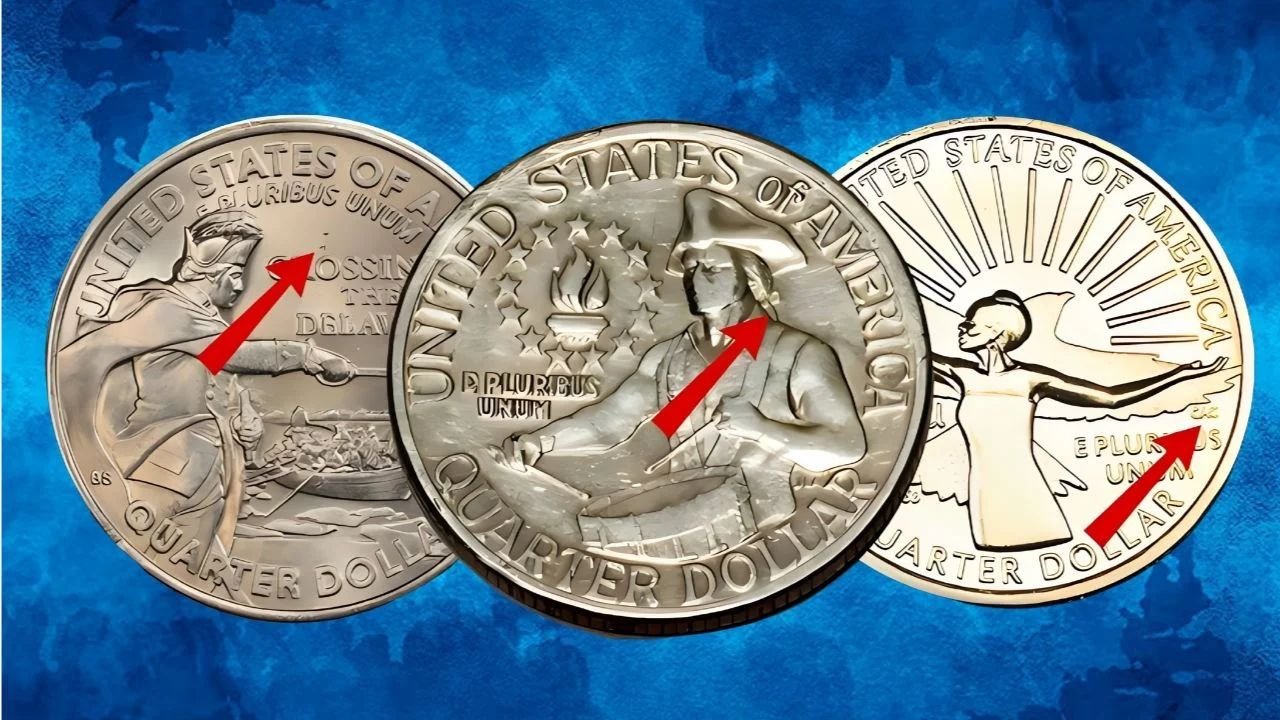

When the State Quarters program launched in 1999, few could have predicted just how massive it would become. Over the next 11 years, from 1999 to 2009, the 50 State Quarters Program captured the hearts of millions of Americans, turning casual savers into passionate collectors and giving everyday pocket change a new sense of excitement.
$2,000 Federal Direct Deposit in November 2025 – Eligibility, Dates & Key IRS Updates
More than just coins, the State Quarters represented a nationwide celebration of history, culture, and pride. Every state had its story told through its unique quarter design, from Delaware’s bold depiction of Caesar Rodney’s ride to Hawaii’s King Kamehameha. For the first time in modern U.S. Mint history, ordinary Americans were eagerly checking their spare change, hoping to complete all 50 designs.
The Birth of an American Phenomenon
The U.S. Mint launched the State Quarters program under the 50 States Commemorative Coin Program Act, authorized by Congress in 1997. Each year, five new quarters were released, featuring designs from the states in the order they joined the Union. The program concluded in 2009 with Hawaii, marking the end of one of the most ambitious coin projects in U.S. history.
This rollout created immense public enthusiasm. Families, schools, and collectors began filling albums and display books with these quarters, learning about American geography and history along the way. The combination of education, patriotism, and collectibility made the State Quarters one of the U.S. Mint’s greatest success stories.
Over 34 billion State Quarters were produced during the program’s 11-year run, proving that even a simple 25-cent coin could ignite national passion for collecting.
What Made the State Quarters So Popular
The genius of the State Quarters program lay in its accessibility. It didn’t require a big investment — anyone with a pocketful of change could participate. This made coin collecting mainstream again, bridging generations and creating a fun, educational hobby for families.
Each design captured something unique about its state — from the Wright Brothers’ plane on North Carolina’s quarter to Mount Rushmore on South Dakota’s. The designs weren’t just beautiful; they carried meaning, pride, and storytelling.
In addition, the U.S. Mint released proof sets, silver editions, and minted collector packs, appealing to both casual collectors and serious numismatists. As a result, the program quickly became a cultural touchstone across America.

Tracking Value Changes Over 11 Years
While most State Quarters still trade for their face value of 25 cents, some have seen remarkable shifts in value due to rarity, condition, and collector demand.
Here’s a breakdown of how values evolved over time:
1. Condition Matters
Circulated State Quarters generally retain face value. However, uncirculated or proof-condition coins — those that have never entered circulation — can fetch higher prices. Coins graded “MS-67” or “MS-68” by professional grading services are often worth several dollars or even more, depending on the state and mint mark.
2. Mint Errors Bring Big Money
Error coins are the hidden treasures of the series. Some State Quarters feature double dies, off-center strikes, or wrong metal compositions. These minting errors can raise the value dramatically. For example, the 2004-D Wisconsin quarter with an extra corn leaf (“High Leaf” or “Low Leaf”) can sell for hundreds of dollars in mint condition.
3. Low Mintage States Are More Valuable
Certain states simply had fewer coins minted, which adds to their rarity. States like Oklahoma (2008) and Minnesota (2005) have lower mintage numbers, making them more desirable among collectors.
4. Silver Proof Editions Hold Premiums
The U.S. Mint’s silver proof sets, containing State Quarters struck in 90% silver, are highly collectible. These coins not only carry numismatic value but also the intrinsic value of silver, making them a smart investment over time.
How the Market Evolved
In the early years (1999–2001), excitement for State Quarters was at its peak. Families and children eagerly awaited each new release, and many banks reported lines of people waiting for fresh rolls of quarters.
By the mid-2000s, as the program matured, market enthusiasm leveled out. While circulated coins remained at face value, error coins, silver sets, and high-grade uncirculated quarters maintained strong demand.
Today, more than a decade after the program ended, collector interest remains steady. While few common State Quarters are “rare” in the traditional sense, there’s enduring nostalgia — and some coins have quietly grown in value, especially pristine examples preserved from day one.
Also Read – $4,983 Direct Deposit in November 2025 – Complete Eligibility and Payment Details

Why State Quarters Still Matter Today
Even though the program ended in 2009, State Quarters continue to play a vital role in American numismatic culture. Here’s why they still matter:
-
They’re Educational: The designs offer a mini history lesson about each state’s heritage.
-
They’re Affordable: Collectors can start with pocket change and gradually build valuable sets.
-
They’re Culturally Significant: The program united Americans from all walks of life through a shared passion for collecting.
-
They Inspire New Collectors: The State Quarters sparked renewed interest in U.S. coinage, paving the way for later programs like the “America the Beautiful” quarters.
Collectors often describe these coins as a bridge between everyday life and history — proof that art and education can thrive even on a 25-cent coin.
Collector Tips: Building a Valuable State Quarters Collection
If you’re interested in collecting or investing in State Quarters, here are a few strategies to help you make the most of your hobby:
1. Focus on Condition and Completeness
Try to collect uncirculated or proof versions. A complete 50-state set in pristine condition often sells for significantly more than face value.
2. Seek Out Errors and Low-Mintage Coins
Research which quarters had known minting errors — for instance, the Wisconsin “extra leaf” and Minnesota “extra tree” varieties. These coins can command high prices even today.
3. Consider Grading High-Quality Coins
Professional grading can authenticate and increase a coin’s value. Coins graded by PCGS or NGC carry credibility and appeal to serious buyers.
4. Preserve and Protect Your Coins
Use acid-free coin holders or albums to prevent oxidation and wear. Avoid handling coins with bare hands, as oils and dirt can degrade their surfaces.
5. Keep Up with Market Trends
The coin market fluctuates with metal prices and collector demand. Check recent auctions and numismatic publications to stay updated on which State Quarters are gaining momentum.
The Emotional Value Behind the State Quarters
Beyond monetary value, the State Quarters hold sentimental worth for millions. Many Americans remember collecting them as children with parents or grandparents — moments of bonding and discovery that transcend generations.
These coins also symbolize a time when national pride and curiosity came together in a simple, shared hobby. They connected people from Maine to California through stories etched in metal.
For some, the State Quarters are an introduction to the fascinating world of coin collecting — for others, they’re treasured keepsakes that remind us of home, history, and heritage.
Frequently Asked Questions About State Quarters
Q1. Are all State Quarters valuable?
Most are worth face value, but uncirculated, proof, or error coins can be worth much more.
Q2. Which State Quarters are the most valuable?
Rare examples like the 2004-D Wisconsin “Extra Leaf” or high-grade low-mintage issues are among the most valuable.
Q3. Can I make money collecting State Quarters?
Yes, though profits depend on condition and rarity. Collecting can be both fun and financially rewarding over time.
Q4. How can I keep my coins in good condition?
Store them in coin capsules or albums, avoid touching the surfaces, and keep them away from moisture or heat.
Q5. Why were the State Quarters so popular?
They blended art, education, and accessibility — turning a simple coin into a powerful piece of American storytelling.
The Legacy of the State Quarters Program
More than a decade after the program’s completion, the State Quarters continue to shine as one of the most successful numismatic campaigns ever launched by the U.S. Mint. They rekindled America’s love for collecting, taught valuable lessons about history, and made millions appreciate the beauty of everyday change.
For collectors today, these coins represent both nostalgia and opportunity — a reminder that even the smallest pieces of metal can carry incredible stories and lasting value.
The State Quarters might have started as common pocket change, but they evolved into cultural icons — timeless treasures of American pride, artistry, and history that will continue to inspire future generations.
Some Important Link
| Download News APP | Click Here |
| WhatsApp Group | Click Here |
| Home Page | Click Here |