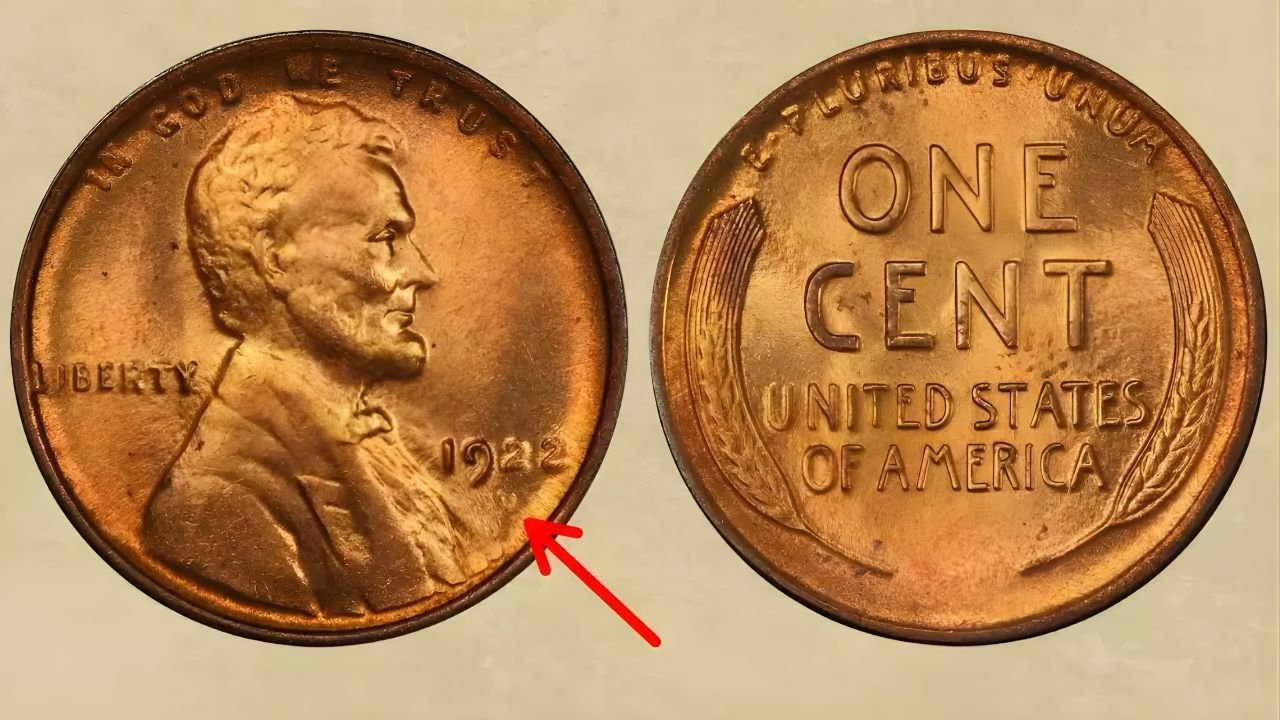

When it comes to treasure hunting, few collectibles in American history hold the same excitement and mystery as the Lincoln Penny. For over a century, this small copper coin has captured the imagination of collectors and historians alike. While most Lincoln Pennies are worth only one cent, a select few—especially those with minting errors—have turned ordinary people into small-time millionaires.
$2,000 Federal Direct Deposit in November 2025 – Eligibility, Dates & Key IRS Updates
Sure, everyone has heard of the famous 1909-S VDB or the legendary 1955 Doubled Die. But hidden behind the spotlight are other rare Lincoln Penny errors that have gone unnoticed for decades. These forgotten gems are now gaining traction among collectors, with experts predicting that their value could skyrocket by 2030—potentially making their owners very wealthy.
Let’s dive into four under-the-radar Lincoln Penny errors that could become the next numismatic superstars.
Why Lincoln Penny Errors Can Skyrocket in Value
History has shown time and again that overlooked varieties can turn into major collectibles almost overnight. Here’s how it happens:
-
A little-known error is discovered by hobbyists.
-
Social media amplifies the buzz.
-
Auctions confirm demand with record-breaking bids.
-
Prices surge as collectors rush to secure remaining examples.
It’s happened with the 1955 Doubled Die, the 1943 Bronze, and even modern coins like the 2021 “Drooling George” Washington quarter. Now, experts believe several rare Lincoln Penny errors are next in line for this explosive growth phase.
The Four “Forgotten” Lincoln Penny Errors to Watch
| Year / Variety | What Makes It Special | Estimated Value (2025) | 2030 Potential |
|---|---|---|---|
| 1922 Weak D / No-D Varieties | Missing or faint Denver mintmark | $300–$6,000+ | Very High |
| 1944 D-over-S | Denver mintmark punched over an earlier “S” | $150–$8,500+ | High |
| 1958 Doubled Die Obverse | Insanely rare, bold doubling | $10,000–$200,000+ | Extreme |
| 1972 Doubled Die Obverse Family | Multiple striking varieties | $75–$2,500+ | High |
Each of these coins shares a powerful combination of rarity, story, and visual appeal—all the ingredients needed to drive collector frenzy and push values upward.
The 1922 No-D and Weak-D Lincoln Penny – The Vanishing Mintmark
The 1922 Lincoln Penny is one of the most intriguing coins in American history. That year, only the Denver Mint struck pennies—so every coin should bear a “D” mintmark. But due to aggressive die polishing and overuse, some coins came out with faint or completely missing mintmarks.
While the famous “No-D Strong Reverse” variety gets most of the attention, lesser-known Weak D and No-D minor varieties are gaining serious traction among collectors.
Why they’re heating up:

-
Only a few thousand are known to exist.
-
Their confusing minting history fascinates new hobbyists.
-
High-grade examples are extremely rare.
💰 Value Range (2025): $300–$6,000+
💎 2030 Potential: Values could double or even triple as collector awareness grows.
The 1944 D-over-S Lincoln Penny – The Wartime Mix-Up
During the 1940s, mintmarks were hand-punched into coin dies, which sometimes led to fascinating overlap errors. One such example is the 1944 D-over-S Lincoln Penny, where a Denver mintmark was accidentally stamped over a San Francisco “S.”
This wartime mix-up occurred when the U.S. Mint was stretched thin during World War II, producing billions of coins under immense pressure.
Why collectors love it:
-
It’s visually striking under magnification.
-
It’s a direct artifact of WWII-era minting.
-
The over-mintmark (OMM) variety is scarce but accessible to mid-level collectors.
💰 Value Range (2025): $150–$8,500+
💎 2030 Potential: Increasing global interest in WWII-era collectibles could push prices even higher.
Also Read – $4,983 Direct Deposit in November 2025 – Complete Eligibility and Payment Details
The 1958 Doubled Die Lincoln Penny – The Hidden Giant
Among all the Lincoln Penny errors, few are as mysterious—or as valuable—as the 1958 Doubled Die Obverse (DDO). Only a tiny handful of examples are known to exist, making it one of the rarest varieties in U.S. numismatic history.
This coin displays dramatic doubling on the date and lettering, similar to the legendary 1955 DDO—but it’s far rarer. So rare, in fact, that only a few verified examples have appeared in auctions over the decades.
When they do appear, collectors go wild. One pristine example sold for over $200,000, and experts predict the next auction could set a new record.

Why it’s a future millionaire-maker:
-
It’s ultra-scarce (fewer than 5 known).
-
High visual impact.
-
Auction headlines always ignite interest.
💰 Value Range (2025): $10,000–$200,000+
💎 2030 Potential: Could rival the 1955 DDO as the most famous Lincoln Penny of all time.
The 1972 Doubled Die Obverse Family – The Modern Favorite
The 1972 Lincoln Penny is often overlooked, but collectors are finally catching on. Multiple doubled die obverse (DDO) varieties exist for this year, with one major standout that shows strong doubling across the words “LIBERTY,” “IN GOD WE TRUST,” and the date.
While not as rare as early-century errors, its affordability and clear doubling make it a favorite for new collectors entering the hobby.
Why it’s gaining momentum:
-
Easily visible doubling without magnification.
-
Still affordable for beginners.
-
Perfect entry point for younger collectors exploring coin errors.
💰 Value Range (2025): $75–$2,500+
💎 2030 Potential: Demand could soar as new digital collectors enter the coin market.
Why These Errors Could Create Millionaires by 2030
Three major trends are converging to fuel the Lincoln Penny boom:
1️⃣ Supply Is Drying Up
Most hidden examples have already been discovered or stored in private collections. As fresh finds become rarer, existing coins will command higher prices.
2️⃣ New Collectors = Explosive Demand
Social media and digital marketplaces have created a wave of young coin enthusiasts eager to own a piece of history. Error coins, with their unique visual flaws, are especially appealing.
3️⃣ Auctions Are Setting New Records
Recent auction data shows record-breaking sales across multiple coin categories. Once a rare Lincoln Penny hits the headlines, demand snowballs almost overnight.
How to Identify These Rare Lincoln Penny Errors
You don’t need expensive tools to start—just a magnifying glass and good lighting.
Look for these signs:
-
Missing or faint mintmarks (1922 varieties)
-
Overlapping mint shapes (1944 D/S)
-
Bold doubling in dates or letters (1958 & 1972 varieties)
If a coin looks “off,” don’t dismiss it. Oddities often mean opportunity.
Preservation Tips for Lincoln Penny Collectors
If you suspect you’ve found a valuable Lincoln Penny, handle it carefully.
✅ Hold coins by the edges—never touch the faces.
✅ Avoid cleaning or polishing; it ruins the surface.
✅ Store coins in acid-free holders or air-tight capsules.
✅ Keep them in a cool, dry environment.
✅ Avoid PVC plastics that can damage copper over time.
Proper storage can preserve your coin’s grade—and its potential six-figure value.
Rarity and Market Potential Breakdown
| Error Variety | Rarity | Visibility | Market Potential |
|---|---|---|---|
| 1922 No-D / Weak D | Rare | Medium | Very High |
| 1944 D-over-S | Rare | High | High |
| 1958 Doubled Die | Extremely Rare | High | Extreme |
| 1972 Doubled Die Family | Semi-Rare | High | High |
Of these, the 1958 Doubled Die remains the crown jewel—so scarce that every confirmed specimen is a numismatic event.
2025–2030 Lincoln Penny Market Outlook
Between 2025 and 2030, experts expect values for all four of these varieties to rise dramatically. Factors like inflation hedging, online education, and expanding collector demographics are combining to create a “perfect storm” for price growth.
In particular, the 1958 DDO and 1922 No-D varieties could experience exponential increases as more collectors compete for fewer available coins.
Final Thoughts
The Lincoln Penny has always been more than just a coin—it’s a piece of American history, a symbol of endurance, and a bridge between generations of collectors.
While many of the famous errors already sell for five or six figures, it’s the forgotten varieties—like the 1922 No-D, 1944 D/S, 1958 DDO, and 1972 DDO—that now offer the biggest opportunities.
These overlooked treasures represent the thrill of discovery. They remind us that fortune doesn’t always come from gold or silver—it can come from a single copper penny hidden in your change jar.
So next time you sift through your coins, don’t rush. That old Lincoln Penny in your palm might just be your ticket to a small fortune by 2030.
Happy hunting! 🪙✨
FAQs
Q1: Are these Lincoln Penny errors still found in circulation?
Rarely. Most discoveries happen in old jars, bank rolls, or inherited collections.
Q2: What makes an error penny valuable?
Scarcity, visibility of the error, collector demand, and coin condition.
Q3: Should I clean an error Lincoln Penny?
Never. Cleaning destroys its patina and reduces value.
Q4: How rare is the 1958 Doubled Die Lincoln Penny?
It’s one of the rarest U.S. coin errors—only a few are known to exist.
Q5: Where can collectors buy or sell rare Lincoln Pennies?
Reputable auction houses like Heritage Auctions, or certified dealers partnered with PCGS and NGC.
Some Important Link
| Download News APP | Click Here |
| WhatsApp Group | Click Here |
| Home Page | Click Here |